 Mass Spectrometry Histochemistry of Human FFPE Material Getting Ready for the Clinic Mass Spectrometry Histochemistry of Human FFPE Material Getting Ready for the Clinic
Peter Verhaert (1); Kenneth Verheggen (1); Nivedita Bhattacharya (1); Remco Crefcoeur (1); Samruddhi Chawan (1,2), Yury Tsybin (3); Konstantin Nagornov (3); Gilles Frache (4); Cecilia Lindskog-Bergström (5); Emma Lundberg (5); Per Andrén (6); Marthe Verhaert (1,2,7); Sandrine Aspeslagh (2); Raf Sciot (7); Kris Van Der Steen (8); Lin Zhang (9); Ling Shan (9); Dick Swaab (9); Wim Develter (10); Marc Ramael (10)
(1) ProteoFormiX, Beerse, Belgium
(2) University Hospital, Jette (Brussels), Belgium
(3) Spectroswiss, Lausanne, Switzerland
(4) Luxembourg Institute of Science and Technology, Esch-sur-Alzette, Luxembourg
(5) Human Protein Atlas, Uppsala & Stockholm, Sweden
(6) Science for Life Labs, Uppsala Sweden
(7) University Hospital, Leuven, Belgium
(8) Onze-Lieve-Vrouw Ziekenhuis, Aalst, Belgium
(9) The Netherlands Institute for Neuroscience, Amsterdam, the Netherlands
(10) Heilig-Hart Ziekenhuis, Lier, Belgium
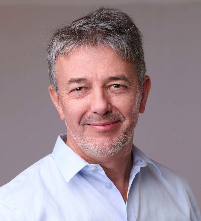 | Peter Verhaert, PhD (Presenter)
ProteoFormiX | Presenter Bio: Since 2024, Peter VERHAERT is part-time professor at the Department of Imaging and Pathology of the Faculty of Medicine of the University of Leuven (Belgium) and honorary professor at the Faculty of Health Sciences of the University of the Witwatersrand (Johannesburg, South-Africa). He is also affiliated to the Laboratory of Applied Mass Spectrometry at the Department of Cellular and Molecular Medicine of the University of Leuven (Belgium).
Peter was full professor Analytical Biotechnology and Innovative Peptide Biology at Delft University of Technology [Netherlands; 2005 – 2016] before founding ProteoFormiX (www.proteoformix.com). His Flemish research company was a startup (now alumnus) of JLABS, the J&J Innovation Center on the Campus of Janssen Pharmaceuticals in Beerse [Belgium; 2017].
Peter is recognized worldwide as one of the pioneers in Peptidomics, Peptides in Biology being the common theme in his >35 years of research.
Prior to taking up his academic position in Delft, Peter's international career already combined academic and industrial positions:
He obtained an MSc in Biology (Zoology Group) and a PhD in Comparative Neurobiology at the University of Leuven, where he held a position as assistant professor [Belgium; 1983-1987].
He then took on a postdoc position at the Laboratory of Toxicology and Biochemistry in the Biology Department of the University of Waterloo [Canada; 1988].
Upon returning to the University of Leuven, he became an associate professor in Histology and Biological Mass Spectrometry [Belgium; 1988-1999].
After an industrial sabbat year at the Flemish Biotech Innogenetics in Ghent [Belgium; 1998-1999], Peter was appointed group leader Proteomics at the Dutch Pharma company Organon (now MSD) in Oss [Netherlands; 2000-2004].
His other professional activities include:
• Co-founder and president of the European Pharmaceutical Proteomics Laboratories (EPPL) [2000-2004];
• Proteomics expert at the Flemish Institute of Biotechnology (VIB) [2000-2004];
• Visiting professor Biomedical Proteomics at the Biomedical Research Institute at the Faculty of Medicine of Hasselt University [Belgium; 2004-2014];
• Editor-in-chief of the Elsevier Open Access Journal EuPA Open Proteomics [2013-2016]
• Co-director of the Center of Excellence in Biomedical Mass Spectrometry (CEBMMS) at the Faculty of Medicine (Clinical Sciences Department) of Lund University [Sweden; 2016];
• Honorary professor Mass Spectrometry Histochemistry at the Maastricht Multimodal Molecular Imaging Institute (M4i) of Maastricht University [Netherlands; 2017-].
| Grant/Research Support |
European Institute of Innovation & Technology EIT) - Health |
| Committee/Board/Advisory Board |
ProteoFormiX; Lake Louise Tandem Mass Spectrometry Organizing Committee |
|
|
 = Discovery stage. (19.79%, 2022)
 = Clinically available. (42.25%, 2022)
