 Rapid Urine Drug Testing by Direct Analysis in Real-Time (DART)-Mass Spectrometry Rapid Urine Drug Testing by Direct Analysis in Real-Time (DART)-Mass Spectrometry
Ibrahim Choucair (1), Gina Cassella-Mclane (1), Joe El-Khoury (1)
(1) Department of Laboratory Medicine, Yale School of Medicine, New Haven, CT
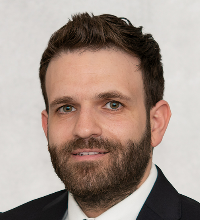 | Ibrahim Choucair, PhD (Presenter)
University of Kentucky College of Medicine | Presenter Bio: I am an Assistant Professor and Director of the Special Chemistry and Toxicology Laboratory in the Department of Pathology and Laboratory Medicine at the University of Kentucky. I also serve as Associate Core Director of the Biofluids Biomarker Core at the University of Kentucky Alzheimer’s Disease Research Center and as Associate Medical Director of the Kentucky State Public Health Laboratory, where I lead Newborn Screening activities.
I received my Bachelor of Science in Clinical Laboratory Science and his master’s degree in Bioanalytical Toxicology from the American University of Science and Technology in Beirut, Lebanon. I later earned my PhD in Clinical Bioanalytical Chemistry through the joint program between Cleveland State University and the Cleveland Clinic and then completed a Clinical Chemistry fellowship at Yale School of Medicine.
My research is centered on two primary objectives: (1) advancing clinical laboratory testing through the development of innovative tools and methodologies, and (2) exploring the relationships between proteins or small molecules and disease pathogenesis to reduce the impact of conditions such as liver disease, cardiovascular disease, diabetes, and Alzheimer’s disease.
Through my work, I strive to deepen our understanding of the mechanisms underlying these disorders, identify novel therapeutic targets, and develop cutting-edge diagnostic tools and treatment approaches. To achieve these goals, I leverage advanced technologies such as mass spectrometry, as well as bioinformatics tools including R and Python, to analyze complex datasets and uncover actionable insights.
I am committed to bridging the gap between basic research and clinical practice, with the ultimate aim of translating scientific discoveries into meaningful improvements in patient care. My passion for this translational approach drives my dedication to advancing the fields of clinical chemistry and toxicology and contributing to better health outcomes.
No relevant financial relationship(s) to disclose.
|
|
 = Discovery stage. (19.79%, 2022)
 = Clinically available. (42.25%, 2022)
