MSACL 2023 Abstract
Self-Classified Topic Area(s): Assays Leveraging MS > Environmental Sustainability
|
|
 Evaluation of Nitrous Oxide as a Reaction Gas for the Analysis of Selenium, Copper, and Zinc in Human Serum Using a PerkinElmer Nexion 5000 Evaluation of Nitrous Oxide as a Reaction Gas for the Analysis of Selenium, Copper, and Zinc in Human Serum Using a PerkinElmer Nexion 5000
: Steve Eckdahl (1), Patrick L Day (1), Sarah Erdahl (1), Ruth Wolf Ph. D (2), Joshua Bornhorst Ph. D (1), Paul J. Jannetto Ph. D (1)
1. Metals Laboratory, Department of Laboratory Medicine and Pathology, Mayo Clinic, Rochester MN, United States
2. PerkinElmer, Inc., 2651 Warrenville Rd, Ste 100, Downers Grove, IL, United States
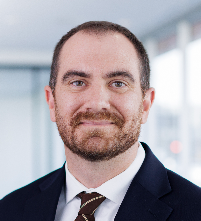 | Patrick Day, MPH, MLS (ASCP) (Presenter)
Mayo Clinic | Presenter Bio: My background, training, and educational degrees are in Laboratory Medicine & Pathology and Public Health. I received my bachelor’s and master’s degrees both from the University of Minnesota. My MPH thesis was on how geospatial supercomputing and clinical laboratory data can be combined to study how socioeconomic determinants of health and geography within the United States are associated with elevated levels of arsenic and mercury in humans. I am currently a principal developer in the Division of Computational Pathology and Artificial Intelligence at the Mayo Clinic in Rochester, MN. Prior to this role, I was a senior developer with the Metals Laboratory at Mayo Clinic. This clinical laboratory is staffed by thirty highly specialized employees that conduct metal analysis of biologic samples as well as analyze thousands of kidney stones a year by Fourier Transform Infrared Spectroscopy (FTIR). In the Metals Laboratory, I developed numerous laboratory developed tests (LDTs) as well as managed various multidisciplinary research projects. I currently hold the academic rank of Instructor in the Mayo Clinic College of Medicine and Science. I have co-authored numerous conference abstracts and peer-reviewed articles related to metals toxicology and artificial intelligence in the clinical laboratory and was honored to receive an American Society for Clinical Pathology 40 under Forty award.
No relevant financial relationship(s) to disclose.
|
|
|
|
|
|
Abstract INTRODUCTION: Elements including selenium, copper, and zinc are often quantified in biological samples using inductively coupled plasma mass spectrometry (ICP-MS). To accurately quantitate elements in these complex matrices, helium gas can be used to attenuate potential polyatomic interferences using cell technology. Due to ongoing helium supply chain issues, it is imperative that alternate gases are evaluated for elemental analysis of biological samples in the clinical laboratory.
OBJECTIVES: Evaluate if nitrous oxide is a suitable collision or reaction cell gas for the accurate analysis of selenium, copper, and zinc in human serum.
METHODS: Human serum samples were analyzed for selenium, copper and zinc using a PerkinElmer NexION 5000 multi-quadruple ICP-MS (PerkinElmer Inc., Waltham MA) with ESI SampleSense automation technology (ESI, Omaha NE) for high-throughput analyses. Samples were measured in dynamic reaction cell mode (DRC) using nitrous oxide as a reaction gas. Selenium was measured at mass 96 after being mass shifted from mass 80 by nitrous oxide. Copper was measured on-mass at mass 65 and zinc was measured on-mass at mass 68. Method performance was evaluated by conducting analytical sensitivity, precision, accuracy, recovery, linearity, and specificity experiments.
RESULTS: Utilizing nitrous oxide as a reaction gas, our laboratory developed method demonstrated an analytical measurement range of 0.1-5.0 mcg/mL for copper and zinc and 10-500 ng/mL for selenium, respectively. Within our analytical measurement range, the within-run precision for each element was determined to be less than 12 %CV and the between-run precision for each element was determined to be less than 13 %CV. Accuracy was determined by analyzing proficiency testing material from multiple vendors and were all within the target ranges for each element. The average recovery of each element was within 6% of the theoretical target. The method displayed an adequate linear response when numerous samples were diluted x2 and x10 throughout the analytical measurement range (Se, y=0.9907x + 0.657 R2=0.9998, Cu y=0.9897x + 0.0113 R2=0.9999, Zn, y= 1.0092x + 0.0078 R2= 0.9997). Elemental carryover studies indicated that instrument and diluter carryover were minimal with analyte carryover never exceeding the lower limit of quantitation for each element.
CONCLUSION: By using nitrous oxide rather than helium to attenuate polyatomic interferences, we were able to create an accurate and precise method for quickly analyzing selenium, copper and zinc at clinically relevant concentrations using a PerkinElmer NexION 5000. The use of nitrous oxide instead of helium, represents a more sustainable alternative for clinical trace metal elemental analysis.
|
|
| |
 = Discovery stage. (24.37%, 2023)
 = Clinically available. (36.13%, 2023)
