 Laboratory Automation to the Rescue: Evolution of the Clam Platform for Automated LC-MS/MS Sample Preparation Laboratory Automation to the Rescue: Evolution of the Clam Platform for Automated LC-MS/MS Sample Preparation
Eishi Imoto (1), Daisuke Kawakami (2), Milaan Thirukumaran (3), Jonathan Ferguson (3), Rachel Lieberman (3), Masayuki Nishimura (3), Alvin Hoang (3) and Scott Kuzdzal (3).
(1) Shimadzu Corporation, Kyoto, Japan, (2) Shimadzu Europa GmbH, and (3) New Strategy Department, Shimadzu Scientific Instruments, Columbia, Maryland, USA
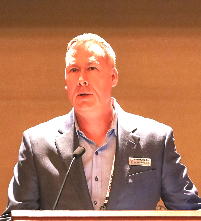 | Scott Kuzdzal, Ph.D., Analytical Chemistry (Presenter)
Shimadzu Scientific Instruments | Presenter Bio: Dr. Scott Kuzdzal received a Ph.D. from the University of California at Riverside. He served as a postdoctoral fellow at the Johns Hopkins University School of Medicine, where he co-founded and directed the Johns Hopkins Center for Biomarker Discovery with Dr. Daniel Chan. Dr. Kuzdzal assisted in the completion of the Human Genome Project, working with Celera Genomics.
In addition to extensive industrial research experience, Dr. Kuzdzal has a strong medicinal and clinical chemistry background and has directed Toxicology and Therapeutic Drug Monitoring Labs at Johns Hopkins Medical Institutions. He currently serves on the editorial review board of Proteomics. He has published protein and peptide biomarkers for pancreatic cancer (HIPAP1), Alzheimer’s disease and ovarian cancer using a wide variety of separation and detection methods. Scott has lectured at continuing medical education courses at Johns Hopkins Hospital, George Mason University/INOVA Fairfax Hospital and the NIH, as well as conferences worldwide. Scott currently serves as the Vice President of the New Strategy Department at Shimadzu Scientific Instruments. He has created many products and brands, such as Kick Some Mass™, Analytical Intelligence™, MegaTOF™ and the Cannabis Analyzer.
Dr. Kuzdzal has over 350 scientific manuscripts, book chapters and presentations. His passion is improving clinical and QC laboratory testing, and development of new, integrated health systems.
Publications: https://independent.academia.edu/ScottKuzdzal
| Honorarium/Expenses |
Shimadzu |
| Grant/Research Support |
Shimadzu |
| Committee/Board/Advisory Board |
Shimadzu Scientific Instruments Executive Committee |
| Salary |
Shimadzu |
|
|
 = Discovery stage. (24.37%, 2023)
 = Translation stage. (39.50%, 2023)
