Molecular Heterogeneity in Human Pancreas, Kidney, and Eye Revealed by Multimodal Spatial Atlases Molecular Heterogeneity in Human Pancreas, Kidney, and Eye Revealed by Multimodal Spatial Atlases
Angela R. S. Kruse 1,2, Kristie I. Aamodt 3, Chunhua Dai 4, Morad C. Malek 1,2, Roy Lardenoije 5, Lukasz Migas 6, Melissa A. Farrow 1,2, Diane Saunders 4, Raf Van de Plas 6, Joana P. Goncalves 5, Richard M. Caprioli 1,8, Alvin C. Powers 3,4,7, Jeffrey M. Spraggins 1,2,8,5
1 Mass Spectrometry Research Center, Vanderbilt University, Nashville, Tennessee, USA.
2 Department of Cell and Developmental Biology, Vanderbilt University, Nashville, Tennessee, USA.
3 Department of Molecular Physiology and Biophysics, Vanderbilt University School of Medicine, Nashville, Tennessee, USA.
4 Division of Diabetes, Endocrinology and Metabolism, Department of Medicine, Vanderbilt University Medical Center, Nashville, Tennessee, USA.
5 Department of Intelligent Systems, Faculty EEMCS, Delft, Netherlands
6 Delft University of Technology, Delft, Netherlands
7 Veteran Affairs Tennessee Valley Healthcare System, Nashville, Tennessee, USA.
8 Department of Chemistry, Vanderbilt University, Nashville, Tennessee, USA.
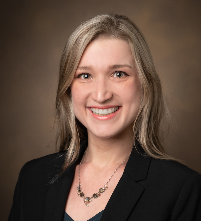 | Angela Kruse, PhD (Presenter)
Ohio State University | Presenter Bio: Angela Kruse is a Research Assistant Professor in the department of Cell and Developmental Biology and the Mass Spectrometry Research Center at Vanderbilt University. Her research integrates imaging mass spectrometry, proteomics, spatial transcriptomics, biochemistry, and microscopy to understand how diabetes affects the molecular environment in the pancreas, kidney, and eye. She received her Ph.D. in Plant Pathology with a focus in Biochemistry from Cornell University prior to conducting her postdoctoral studies under the guidance of Drs. Richard Caprioli and Jeff Spraggins at Vanderbilt University. She plans to spend her career applying and integrating cutting edge technologies to address important challenges in human health and the environment.
No relevant financial relationship(s) to disclose.
|
|
 = Discovery stage. (16.60%, 2024)
 = Translation stage. (37.02%, 2024)