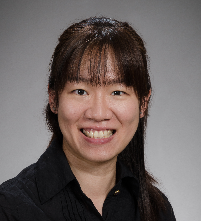
Hsuan-Chieh (Joyce) Liao, PhD, DABCC (Presenter) University of Washington
Presenter Bio: Dr. Joyce Liao was a medical laboratory scientist in the newborn screening lab and obtained her Ph.D. degree in Clinical Medicine. She completed postdoctoral fellowship training in Clinical Chemistry at the University of Washington and Seattle Children’s Hospital. She is a board-certified Clinical Chemist and now serves as Chemistry Director at Harborview Medical Center. She continues to focus on the translation of the analytical power of mass spectrometry to real clinical applications. Her interests include toxicology, mass spectrometry, and laboratory utilization.
Relevant Financial Disclosures
(within past 24 months, reported on Sep 23, 2025)
No relevant financial relationship(s) to disclose.
Presenter Bio: Joshua is currently the Section Head of Clinical Biochemistry at Cleveland Clinic. He earned his PhD in chemistry from Carnegie Mellon University. He conducted postdoctoral research at Massachusetts Institute of Technology before completing a two-year clinical chemistry fellowship at University of Washington and 4 years as Assistant Professor at Weill Medical College. Joshua has special expertise developing and overseeing mass spectrometry assays in the clinical laboratory.
Relevant Financial Disclosures
(within past 24 months)
Not yet reported.
Abstract
Session Description
Liquid handlers have become essential in both academic and reference laboratories, specifically enhancing the efficiency of sample extraction and preparation for large-testing-volume LC-MS/MS assays. These systems offer benefits such as reducing pipetting errors and conserving staff resources. However, they are not immune to operational errors and require rigorous validation to prevent significant errors that may not be immediately evident if the device is poorly programmed or misused by operators. This practical training session will highlight the advantages of liquid handlers and outline the necessary validations before deployment. We will also demonstrate two case studies where inappropriate pipetting techniques and faulty applications of vendor-supplied programming resulted in significant near misses, posing considerable risks to patient safety. The session will be interactive, presenting these topics through case studies and engaging participants in a discussion on effective strategies to mitigate risks associated with liquid handlers in clinical laboratory environments.
Take home Pearls
- Understand the benefits and potential risks of using liquid handlers
- Implement strict validation plans to eliminate potential pipetting and programming errors in liquid handler systems.
- Develop effective strategies to mitigate risks associated with liquid handlers in clinical settings.
 = Discovery stage. (53.14%, 2025)
 = Translation stage. (22.33%, 2025)
 = Clinically available. (24.53%, 2025)