Challenges of Dried Blood Spot Applications Challenges of Dried Blood Spot Applications
Grace van der Gugten (1), Maryam Salehi (2)
(1) Provincial Health Services Authority, Vancouver, Canada, (2) Emory University, Atlanta, GA
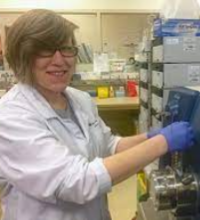 | Grace van der Gugten, B.Sc. Chemistry (Presenter)
Provincial Health Services Authority, BCCDC Toxicology Lab | Presenter Bio: Grace discovered her love for clinical mass spectrometry when she began working at St Paul's Hospital in Vancouver in the special chemistry mass spec group with Dr. Dan Holmes in late 2010. Grace was challenged in this role but gained a wealth of knowledge and experience over her 10+ years in the SPH laboratory. She puts this experience and knowledge into use in her current role as Mass Spectrometry Lab Scientist in the Toxicology Lab at the BCCDC in Vancouver, BC. Grace loves developing streamlined, easy to use (if possible!) clinical mass spectrometry assays; teaching others and helping others succeed; and troubleshooting (especially when the problem is solved!).
No relevant financial relationship(s) to disclose.
|
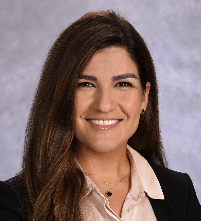 | Maryam Salehi, PhD, MS, NRCC, FADLM (Presenter)
Emory University School of Medicine | Presenter Bio: Maryam Salehi is a board-certified clinical chemist. She earned her PhD in Biomedical Sciences from the University of South Dakota in 2017. Later that year Dr. Salehi joined the Emory University Department of Pathology where she completed a postdoctoral fellowship in Clinical Chemistry in 2019. Following that, Maryam joined CDC’s Newborn Screening Laboratories and worked as a clinical chemist focusing on method development and validation of mass spectrometry based NBS testing, as well as production and evaluation of NBS quality control and proficiency testing materials. Dr. Salehi then joined Phoenix Children’s as an Assistant Professor and the Director of Special Chemistry where she brought up new clinical services including hemoglobinopathy service and autoimmunity testing. She also drove the setup of a new mass spectrometry laboratory from the ground up. In 2024, Maryam joined the Department of Pathology at Emory University School of Medicine as an Assistant Professor of Pathology; she also serves as the Medical Director of Toxicology and Associate Medical Director of Clinical Chemistry at Grady Health System which is a level 1 trauma center in Atlanta. She currently focuses on setting up a mass spectrometry laboratory section to bring toxicology confirmatory testing to Grady. Maryam is passionate about teaching pathology residents, medical students and laboratory staff, advancing her career in clinical toxicology area, and building new high complexity clinical lab services from the ground up.
|
 = Discovery stage. (53.14%, 2025)
 = Translation stage. (22.33%, 2025)