Spatial Profiling of Elements through Matrix-Assisted Laser Desorption Ionization Mass Spectrometry Imaging Spatial Profiling of Elements through Matrix-Assisted Laser Desorption Ionization Mass Spectrometry Imaging
Sylwia A. Stopka (1), Clément Bodineau (1,2), Gerard Baquer (1), Jia-Ren Lin (3,4), Md Amin Hossain (1), Camilla J. Martinez (1), Michael S. Regan (1), Daniela Ruiz (1), Stecia-Marie Fletcher (9), Olivier Pourquié (2), Svetlana Lutsenko (5,6), Connor N. Payne (7), Jeffrey N. Agar (8), Ralph Mazitschek (7), Nathan J. McDannold (9), Peter K. Sorger (3,4,10), Sandro Santagata (2,3,4,10), Nathalie Y. R. Agar (1,9,11)
(1) Department of Neurosurgery, Brigham and Women’s Hospital, Harvard Medical School, Boston, MA, USA.
(2) Department of Pathology, Brigham and Women’s Hospital, Harvard Medical School, Boston, MA, USA.
(3) Laboratory of Systems Pharmacology, Harvard Program in Therapeutic Science, Boston, MA, USA.
(4) Ludwig Center at Harvard, Harvard Medical School, Boston, MA, USA.
(5) Department of Medicine, Johns Hopkins University School of Medicine, Baltimore, MD, USA.
(6) Department of Physiology, Johns Hopkins University School of Medicine, Baltimore, MD, USA.
(7) Center for Systems Biology, Massachusetts General Hospital, Boston, MA, USA.
(8) Department of Chemistry and Chemical Biology, Northeastern University, Boston, MA, USA.
(9) Department of Radiology, Brigham and Women’s Hospital, Harvard Medical School, Boston, MA, USA.
(10) Department of Systems Biology, Harvard Medical School, Boston, MA, USA.
(11) Department of Cancer Biology, Dana-Farber Cancer Institute, Harvard Medical School, Boston, MA, USA.
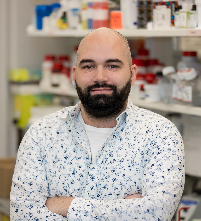 | Clement Bodineau, Ph.D. (Presenter)
Brigham and Women's Hospital |
No relevant financial relationship(s) to disclose.
|
|
 = Translation stage. (22.33%, 2025)
 = Clinically available. (24.53%, 2025)