Self-Classified Topic Area(s): Practical Training > Lipidomics > Spatialomics : Procedure and Validation
Getting the Lipids Right: A LC-MS/MS Tutorial on PEth
Daisy Unsihuay Henry Ford Hospital, Detroit, MI
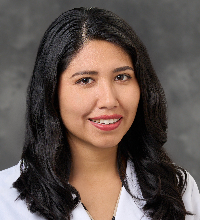
Daisy Unsihuay Vila, PhD (Presenter) Henry Ford Hospital
Presenter Bio: Daisy Unsihuay Vila, PhD, is an associate director of Clinical Chemistry at Henry Ford Hospital. Her professional focus is on advancing and streamlining clinical mass spectrometry (MS)-based workflows for therapeutic drug monitoring, toxicology, and other small molecule analysis. Dr. Unsihuay Vila earned her PhD in Chemistry at Purdue University– Indiana. She completed the Clinical Chemistry fellowship program at the Hospital of the University of Pennsylvania and Children’s Hospital of Philadelphia where she contributed to the development and evaluation of innovative POC devices for the detection drugs of abuse.
Relevant Financial Disclosures
(within past 24 months, reported on Jun 10, 2026)
No relevant financial relationship(s) to disclose.
Abstract
This tutorial will provide practical guidance for lipid analysis in the clinical lab, drawing on hands-on experience developing a targeted LC-MS/MS assay for phosphatidylethanol (PEth). We will begin with a brief overview of lipid classes, their preferred ionization modes, and fragmentation patterns, highlighting how these choices impact assay performance. Examples will be used to illustrate common analytical challenges, including isobaric and isomeric interferences and chromatographic separation issues. We will review sample preparation strategies, from simple to more involved methods, and share lessons learned on selecting appropriate internal standards and building reliable calibration curves. Given the endogenous nature of PEth, we will also discuss how variability in patient lipid metabolism can affect quantification and how to recognize and discuss potential approaches to manage these cases. This session is ideal for those using LC-MS/MS for lipidomics or targeted lipid testing in clinical diagnostics.
 = Discovery stage. (53.14%, 2025)
 = Translation stage. (22.33%, 2025)
 = Clinically available. (24.53%, 2025)