MSACL 2025 Abstract
Self-Classified Topic Area(s): Small Molecule > Lipidomics > Precision Medicine
|
|
 Development of a Specific LC-MS/MS Method for the Quantification of Brain Cholesterol Metabolites in Neurodevelopmental Disorders Development of a Specific LC-MS/MS Method for the Quantification of Brain Cholesterol Metabolites in Neurodevelopmental Disorders
Sophie Bouhour, Pierre-Luc Mallet and Artuela Çaku
Department of Biochemistry and Functional Genomics, Université de Sherbrooke, Sherbrooke, QC, Canada
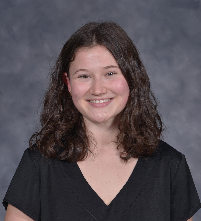 | Sophie Bouhour, M.Sc (Presenter) 
University of Sherbrooke | Presenter Bio: I completed my B.S. in Health Biochemistry at the University of Sherbrooke, and then a M.Sc in Phisiology. I then pursued a Ph.D. in Biochemistry at the University of Sherbrooke under the supervision of Dre. Artuela Çaku, a physician specialized in Medical Biochemistry, and Pierre-Luc Mallet, a clinical biochemist. My research is driven by a strong interest in understanding how cholesterol metabolism influences neurodevelopmental disorders. Using LC-MS/MS, I am working to develop a reliable method for analyzing 18 key metabolic derivatives in the brain, called oxysterols. The potential impact of this work extends beyond fundamental biochemistry, offering new perspectives for diagnosing and monitoring conditions like Fragile X syndrome and autism spectrum disorders.
Beyond my research, I actively participate in scientific outreach and student representation, contributing to initiatives that support young researchers and promote science communication. I am eager to continue developing expertise in mass spectrometry and lipidomics.
No relevant financial relationship(s) to disclose.
|
|
|
|
|
|
Abstract INTRODUCTION:
Several neurodevelopmental disorders, including Smith-Lemli-Opitz syndrome, Fragile X syndrome, and autism spectrum disorders, are associated with impairments in peripheral and cerebral cholesterol homeostasis. Oxidized derivatives of brain cholesterol, known as oxysterols, are promising biomarkers due to their ability to cross the blood-brain barrier. The quantification of these oxysterols in plasma offers a non-invasive approach to assess cerebral cholesterol homeostasis in these disorders. However, their low plasma concentrations and their structural similarities present significant analytical challenges, with only a few methods available for their simultaneous analysis.
OBJECTIVE:
This study aims to develop and validate a sensitive and specific method using liquid chromatography coupled with tandem mass spectrometry (LC-MS/MS) for the analysis of 18 compounds: 5 cholesterol precursors, 5 auto-oxidized oxysterols, and 8 enzyme-derived oxysterols.
METHODS:
The LC-MS/MS method was developed using an Acquity UPLC system coupled with a Xevo TQ-S micro mass spectrometer (Waters). The ionization source was electrospray ionization in positive mode. Stable deuterium-labeled analogs were used as internal standards for each compound.
RESULTS: The dynamic Multiple Reaction Monitoring (MRM) acquisition mode was employed. Specific transitions were designated for the 18 oxysterols and their respective internal standards. A preliminary isocratic separation of oxysterols was obtained using a C8-silica column at 62.5% acetonitrile with 0.1% formic acid (B) and 37.5% HPLC-grade water with 0.1% formic acid at a flow rate of 0.3 mL/min. This initial step was followed by a linear gradient from 62.5% to 98% acetonitrile in order to enhance the separation of the most hydrophobic compounds. This chromatography setup provided an initial resolution of the 18 oxysterols, with a total run time of 17.5 minutes. This preliminary method demonstrated linearity between 5 and 1450 nM for 17 oxysterols in pure standards solutions, with limits of quantification of 1 nM for 10 compounds and 5 nM for the remaining 7 oxysterols.
CONCLUSION:
Mass spectrometry, ionization, and chromatographic separation parameters will be further optimized. The method validation will be performed according to Clinical & Laboratory Standards Institute (CLSI) C62 guidelines. Oxysterols will then be quantified in individuals with neurodevelopmental disorders. In the long term, this method will be implemented in clinical laboratories to support potential diagnostic applications and prognostic monitoring of cholesterol-related neurodevelopmental disorders. |
|
| |
 = Translation stage. (22.33%, 2025)
 = Clinically available. (24.53%, 2025)
