MSACL 2025 Industry Workshop Presentation
*This Podium Presentation is occuring in the context of an Industry Workshop that starts at the time below.
Its actual start time may be up to 40 minutes later, depending on order of presentation if there are multiple presentations planned by the workshop host.
| Workshop Host: | Waters Corporation |
| Day: | Wednesday September 24 |
| Time: | 7:30* |
| Location: | Montreal 4 (Track 3) |
|

|
|
Investigating Podocyturia in Preeclampsia Women and Fabry Disease Patients Using a Tandem Mass Spectrometry Approach
|
|
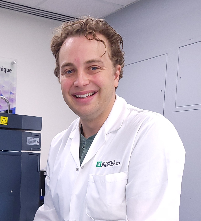
Tristan Martineau, M.Sc.
Université de Sherbrooke
|
Presenter Bio: Tristan Martineau is a graduated biochemist at the Waters-CHUS Expertise Centre in Clinical Mass Spectrometry in Sherbrooke, QC. He holds a master's degree in Radiation Science and Biomedical Imaging (RSBI) and a bachelor’s degree in health biochemistry from the Faculty of Medicine and Health Sciences (FMSS) at the Université de Sherbrooke (U de S). He is currently doing a Ph.D. in biochemistry at the U de S at the FMSS under the supervision of Professor Christiane Auray-Blais and Dr Bruno Maranda.
His work focusses on translational applications using mass spectrometry in the fields of lysosomal storage disorders and inborn errors of metabolism. His actual Ph.D. project focusing on the discovery of new biomarkers in biological fluids of patients with Pompe disease using metabolomic and lipidomic approaches with high-resolution mass spectrometry. During his research project, he is dedicated to investigate secondary pathways of glycogen metabolism to find new potential metabolites for monitoring and follow-up of IOPD and LOPD patients. He also would like to perform a technological transfer of his biomarker discoveries for the advancement in the clinical field.
|
|
|
|
|
Summary Several studies suggest that the evaluation of podocyturia may provide for an effective biochemical indicator of renal damage but current methodologies for this evaluation are challenging. Herein, we present an LC-MS/MS method for the determination of urinary podocalyxin and podocin to provide for this assessment. The quantitation strategy was based on absolute protein quantitation using reporter peptides. This method offers major benefits for clinical analysis, such as good sensitivity, high specificity and reduced sample volume for analyses.
|
|