Translating Pre-Clinical Research to Clinical Patient Care™
MSACL 2026Montreal Oct 4-9 |
Agenda
|
Agenda (Preliminary) - View Program
Friday, October 9
Time |
Sessions |
|||
|---|---|---|---|---|
900 |
Mount Royal Kondiaronk Belvedere Challenge Location: Salon Bonaventure, Hotel Level
3 mile round trip run/walk. 554 ft elevation gain. Check-in at 7:00 am for water, coffee, bananas. Group photo at 7:10 then we will proceed down the elevator. Run/walk commences at 7:15-7:20. |
|||
930 |
Breakfast Location: Montreal 1-4
All attendees are welcome to partake of a hearty breakfast and closing seminar before departure. |
|||
1015 |
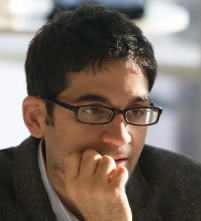
Closing Plenary 1 : Can metabolomics enable precision nutrition in oncology? Location: Montreal 5
Yes, it is ok to arrive in your running attire. 12pm checkout time at Hotel Bonaventure. The success of precision medicine has been driven by the increasing availability of genomics data from millions of individuals. To date, however, collecting untargeted metabolomics data at a comparable scale has been challenging. This presentation will describe a mass spectrometry-based workflow to overcome that barrier and highlight its application to a 20,000-subject cohort. We will present findings that reveal unexpected complexities in the metabolism of dietary sugar, some of which depend on the composition of the gut microbiome. We will demonstrate that dietary sugar drives the production of circulating lipid species avidly taken up by tumors. Together, our findings will establish that excessive consumption of dietary sugar promotes cancer progression and underscore the potential of metabolomics to guide precision nutrition in oncology. |
|||
1115 |
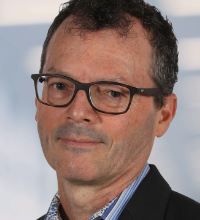
Closing Plenary 2 : AI can pass the boards. So where's my jetpack? Location: Montreal 5
AI models are now trained on nearly all the scientific literature. The capability is real, not hype. If a machine can pass the exam that certified us, it should be able to help with the hard part of our job. But we don't trust it. Why? The reason is older than AI. Oliver Hart won a Nobel Prize for a simple observation: no contract or set of procedures can cover every situation the future will bring. This residual work cannot be written down and must be decided by a person. Language models can only learn what we can write. AI is here because computing power has grown exponentially for 60 years. But since 1950, the number of drugs approved per inflation-adjusted research dollar spent has dropped by half every 10 years. The lack of predictive validity in tests that tell which compounds affect disease in humans bears much of the blame. Finding what works is slow, expensive, and noisy. Cheaper, faster generation of drug candidates has only produced more failures, because generating plausible answers was never the hard part. A path forward is to drive AI candidate answers through verification systems that use explicit models of the real world. Humans can put more knowledge into these tests than a language model can learn. The test rejects violations of physical law and flags the rest. The residual work never disappears. It moves later and compresses, until the only thing left is the human judgment of whether a result is true. A person must still sign out the case, but the technology to let AI make this part a little easier already exists. And it's a jetpack. |
|||

|

|

|
Join the conversation