Short Course : LC-MSMS 101 : Getting Started with Quantitative LC-MSMS in the Diagnostic Laboratory
Location: De Anza 2 (Portola Hotel > Ground Floor)
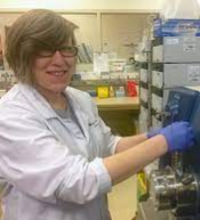
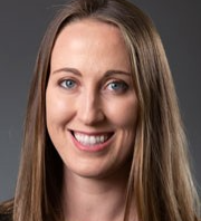
Grace van der Gugten, B.Sc. Chemistry Provincial Health Services Authority, BCCDC Toxicology Lab
Grace discovered her love for clinical mass spectrometry when she began working at St Paul's Hospital in Vancouver in the special chemistry mass spec group with Dr. Dan Holmes in late 2010. Grace was challenged in this role but gained a wealth of knowledge and experience over her 10+ years in the SPH laboratory. She puts this experience and knowledge into use in her current role as Mass Spectrometry Lab Scientist in the Toxicology Lab at the BCCDC in Vancouver, BC. Grace loves developing streamlined, easy to use (if possible!) clinical mass spectrometry assays; teaching others and helping others succeed; and troubleshooting (especially when the problem is solved!).
Relevant Financial Disclosures
(within past 24 months, reported on Mar 05, 2026)
No relevant financial relationship(s) to disclose.
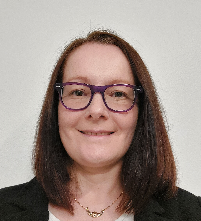
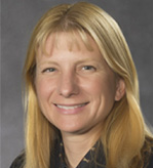
Deborah French, PhD, DABCC (CC, TC), FADLM UCSF
Deborah French Ph.D., DABCC (CC, TC), FADLM is a Director of Chemistry and the Director of Mass Spectrometry at the University of California San Francisco Health Clinical Laboratories. Her work currently focuses on the development and validation of LC-MS/MS assays for small molecules, specifically therapeutic drug monitoring, steroid hormones and toxicology. Deborah received her Ph.D. in biochemistry from the University of Strathclyde in Glasgow, Scotland and then completed a postdoctoral fellowship at St. Jude Children’s Research Hospital in Memphis, TN. She subsequently completed a ComACC Clinical Chemistry postdoctoral fellowship under the direction of Dr Alan Wu at the University of California San Francisco and is now board certified in Clinical Chemistry and Toxicological Chemistry by the American Board of Clinical Chemistry.
Relevant Financial Disclosures
(within past 24 months, reported on Feb 27, 2026)
Consultant Fees
ARK Diagnostics, Roche Diagnostics (ended)
Jacqueline Hubbard, PhD, DABCC Beth Israel Deaconess Medical Center, Harvard Medical School
Jacqueline Hubbard received her BS degree in Biochemistry from the University of Vermont. She then earned her MS and PhD in Biochemistry and Molecular Biology from the University of California, Riverside (UCR). Following a one year postdoc at UCR, Dr. Hubbard completed a Fellowship in Clinical Chemistry at the University of California, San Diego Health. She is board certified in Clinical Chemistry by the American Board of Clinical Chemistry. After fellowship, she took a position as an Assistant Professor in the Department of Pathology and Laboratory Medicine at the Geisel School of Medicine at Dartmouth and as the Assistant Director of Clinical Chemistry at Dartmouth-Hitchcock Medical Center. There, she focused on developing and validating drugs of abuse assays and SARS-CoV-2 serology testing. Next, she briefly served as a Lab Director for a small reference laboratory in PIttsburgh, PA. She then joined Beth Israel Deaconess Medical Center as the Co-Director of Clinical Chemistry and Director of Toxicology in 2024. She is also an Assistant Professor of Pathology for Harvard Medical School. Her research focus still includes mass spectrometry method development and toxicology test interpretation.
Relevant Financial Disclosures
(within past 24 months, reported on Mar 08, 2026)
No relevant financial relationship(s) to disclose.
Lorin Bachmann, PhD, DABCC VCU Health System
Lorin Bachmann joined the VCU Department of Pathology in 2007. She currently serves as Co-Director of Clinical Chemistry, Co-Director of Point-of-Care Testing, Director of the New Kent Emergency Department Laboratory, Technical Advisor for the Operating Room Laboratory, Pathology Outreach and Clinical Trials, and Laboratory Director for multiple VCUHS outreach laboratories. Dr. Bachmann received her PhD in Molecular Medicine from the University of Virginia, followed by a fellowship in clinical chemistry and proteomics research at the University of Virginia. Dr. Bachmann is certified by the American Board of Clinical Chemistry.
Dr. Bachmann serves as a member of the CLSI Board of Directors. She also serves as a member of the College of American Pathologists Standards Committe.
Dr. Bachmann’s research interests include evaluation and validation of new clinical laboratory assays, clinical laboratory analyzer design, development of mass spectrometry-based assays for the clinical laboratory and standardization of laboratory testing. She serves as a Member of the National Institute of Diabetes and Digestive and Kidney Diseases (NIDDK)/International Federation of Clinical Chemistry Laboratory (IFCC) Joint Lab Working Group for Standardization of Albumin in Urine, whose goal is to accomplish standardization of urine albumin methods to enable utility of clinical decision thresholds.
Dr. Bachmann has received numerous awards for her contributions to professional societies, education and research. She serves as principal investigator for multiple industry-sponsored studies.
Relevant Financial Disclosures
(within past 24 months, reported on May 03, 2025)
Other Potential Conflicts
Bio-Rad Laboratories, Inc / Honorarium / Ended
1430
1830
Short Course : LC-MSMS 201 : Practical LC-MS/MS Method Development and Bioanalytical Method Validation for Clinical and Non-Clinical Samples
Location: Ironwood 2 (Portola Hotel > 3rd Floor)
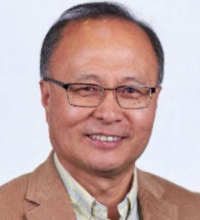
Perry Wang, PhD LC-MS Technical Expert
Dr. Perry G. Wang has been a chemist at US FDA since 2008. Prior to joining the FDA, he worked in the pharmaceutical and medical-device industry. He received his Ph.D. from Oregon State University. He specializes in LC-MS/MS method development and validation for drugs, cosmetics, foods, and dietary supplements. In addition to publishing over 30 peer-reviewed scientific papers, Dr. Wang has edited and co-edited five books: “High-Throughput Analysis in the Pharmaceutical Industry”, “Monolithic Chromatography and Its Modern Applications”, “Hydrophilic Interaction Liquid Chromatography (HILIC) and Advanced Applications”, “Counterfeit Medicines”, and “High-Throughput Analysis for Food Safety”. He has been invited to teach this course at PittCon since 2007. He also teaches this course at American Society for Mass Spectrometry (ASMS), American Chemical Society (ACS), Eastern Analytical Symposium (EAS), and HPLC. He teaches these courses in his own capacity as a scientist, but not as an employee of the FDA.
Relevant Financial Disclosures
(within past 24 months, reported on Apr 09, 2024)
Not yet reported.
1430
1830
Short Course : LC-MSMS 302 : Advanced LC-MS/MS Method Development, Method Troubleshooting and Instrument Operation Needed in Developing Successful Methods for Molecular identification and Quantitation in the Clinical Lab
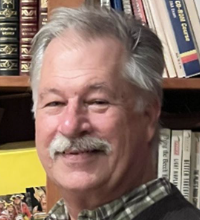
Dr. Robert D. Voyksner received his B.S. in Chemistry at Canisius College in 1978 and his Ph.D. at the University of North Carolina at Chapel Hill in 1982. He was employed at Research Triangle Institute (RTI) from 1983-2001 as the director of the mass spectrometry facility and has been responsible for developing
extraction, separation and mass spectrometric methods for biologically and environmentally significant compounds. His work earned him the Presidents Award, the highest award within RTI. In 2001 he co-founded LCMS Limited in Durham, NC and has been the CEO of the company to date. Under his direction LCMS Limited is working on technological advancements in LC-MS/MS, offering services to pharmaceutical, clinical and agrochemical industry for solving unique problems by LC/MS/MS and offering training in LC/MS/MS and MS/MS interpretation and on LC/MS/MS instrumentation. Dr Voyksner is also an Adjunct professor at the North Carolina a School of Veterinary Medicine and at The University of North Carolina
School of Pharmacy.
Dr. Voyksner's research in mass spectrometry has resulted in over 230 publications and presentations, primarily in the area of LC-MS/MS. He has served on the Board of Directors for The American Society For Mass Spectrometry (ASMS), is on the organization committee for The Montreux LC/MS Symposium and was the organizer for the 1995, 1999, 2003 and 2007 Montreux LC/MS Symposia. Dr. Voyksner has taught over 100 courses on LC-MSMS, CE/MS and CID interpretation during the past 10 years for MSACL, ASMS, pharmaceutical companies; ISSX, PBA, HPCE and HPLC focused meetings.
Relevant Financial Disclosures
(within past 24 months, reported on Jan 14, 2026)
Dustin R. Bunch, is an Asst. Director of Clinical Chemistry & Co-Director Laboratory Informatics at Nationwide Children's Hospital. His research focuses small molecule analysis by mass spectrometry in a clinical setting and clinical informatics.
Relevant Financial Disclosures
(within past 24 months, reported on Feb 13, 2024)
Not yet reported.
Nicholas Spies, MD University of Utah, ARUP Laboratories
Nick Spies, MD, is a bioinformatician-turned-laboratorian who is a medical director in the Applied Artificial Intelligence group within ARUP laboratories' Division of Research and Innovation. He is focused on applying analytical techniques to improve the way we detect laboratory errors, and hopes to spread the good word of data science and machine learning within the laboratory medicine community.
Relevant Financial Disclosures
(within past 24 months, reported on Apr 30, 2026)
Not yet reported.
1430
1830
Short Course : Data Science 203 : Machine Learning : A Gentle Introduction
Location: Bonsai (Portola Hotel > Ground Floor)
Randall Julian, PhD Indigo BioAutomation
Randy Julian is the Founder and CEO of Indigo BioAutomation. Randy earned a Ph.D. in Chemistry from Purdue University. Dr. Julian worked for 14 years at Eli Lilly using mass spectrometry in natural product drug discovery, high throughput screening for RNA anti-viral compounds, and proteomics and metabolomics in animal models. Randy founded Indigo as a spin-out of Lilly. Indigo develops software that uses machine learning techniques to automatically analyze data from laboratories world-wide. Indigo's technology also drives new stand-alone medical devices, bringing advanced data analysis to every level of the clinical lab. Dr. Julian is also is an Adjunct Professor of Chemistry at Purdue.
Relevant Financial Disclosures
(within past 24 months, reported on Feb 27, 2026)
Stock/Bonds
Indigo BioAutomation, Inc.
Salary
Indigo BioAutomation, Inc.
Stephen Master, MD, PhD, FADLM Children's Hospital of Philadelphia
Stephen Master received his undergraduate degree in Molecular Biology from Princeton University, and subsequently obtained his MD and PhD from the University of Pennsylvania School of Medicine. After residency in Clinical Pathology at Penn, he stayed on as a faculty member with a research focus in mass spectrometry-based proteomics as well as extensive course development experience in bioinformatics. After time as an Associate Professor of Pathology and Laboratory Medicine at Weill Cornell Medicine in New York City, where he served as Director of the Central Lab and Chief of Clinical Chemistry Laboratory Services, he took a position at the Children's Hospital of Philadelphia as Chief of Lab Medicine. One of his current interests is in the applications of bioinformatics and machine learning for the development of clinical laboratory assays. He would play with R for fun even if he weren't getting paid, but he would appreciate it if you didn't tell that to his department chair.
Relevant Financial Disclosures
(within past 24 months, reported on Feb 27, 2026)
Short Course : Metabolomics 102 : Microsampling and Mass Spectrometry – Fit for Purpose in the Clinical Screening and Monitoring Space
Location: Cottonwood 1 (Portola Hotel > 3rd Floor)
Donald Chace, PhD, MSFS, FACB Capitainer
Donald H. Chace, PhD, MSFS, FAACC is the Senior Application and Product Specialist for Capitainer. He is one of the primary developers of newborn metabolic screening using tandem Mass Spectrometry. Developed 25 years ago with the first screening publication in Clinical Chemistry that describes the MS-based newborn screening of PKU, the method is now used to screen millions of infants per year, worldwide. Dr. Chace is an expert in metabolism and clinical chemistry using mass spectrometry as well as microsample analysis, e.g. the dried blood spot. He has published 100 peer reviewed articles and has presented at numerous conferences that focus on areas in Neonatology, Clinical Chemistry, Newborn Screening, Mass Spectrometry and Forensic Science. Dr. Chace is a guest researcher in the newborn screening and molecular biology division at the CDC and recently joined mQACC.
Relevant Financial Disclosures
(within past 24 months, reported on Feb 13, 2024)
Salary
Capitainer
Tim Garrett, PhD University of Florida College of Medicine
Dr. Garrett has over 20 years of experience in the field of mass spectrometry spanning both instrument and application development. He received his PhD from the University of Florida, under Dr. Richard A. Yost, working on the first imaging mass spectrometry-based ion trap instrument. He has also developed MALDI-based approaches to analyze proteins in bacteria and small molecules in tissue specimens. His current interests include development of techniques and instrumentation for metabolomics science using LC-HRMS and translational work in diagnostics for dried blood spots. He is an Associate Professor in the Department of Pathology at the University of Florida, and Director for the Southeast Center for Integrated Metabolomics (SECIM).
Relevant Financial Disclosures
(within past 24 months, reported on Sep 11, 2025)
No relevant financial relationship(s) to disclose.