Translating Pre-Clinical Research to Clinical Patient Care™
MSACL 2025Montreal Sept 21-26 |
Details
|
Trainee Poster Contest
View Poster Contest Participants
ELIGIBILITY: To be eligible you must be a current TRAINEE (e.g., students, post-docs, residents fellows and similar), or your training program must have ended after September 1, 2024. Reasonable exceptions may apply. Troubleshooting posters are not eligible.
AWARDS: There will be up to three financial awards*, depending on the number of participants and quality of the posters. These awards will be of 500 USD for up to the top three finishers.
LOGISTICS: Participants must indicate interest via Abstract Management through their Network Directory Profiles (if not already indicated during abstract submission) and upload a PDF of their poster by September 1.
POSTER UPLOAD : Participants will need to upload a PDF of their poster via their Network Directory Profile by September 1, so that it may be reviewed by the judges to select the Finalists who will be interviewed by the Poster judges during their poster presentation period.
ROUND ONE : Review of PDF Posters : The Judging Committee will review the Candidate Posters via the Uploaded PDFs between September 2-10. Each judge will select their 4 top posters, in order of preference. From these selections the Judging Committee will identify the finalists (~6-8). Finalists will be notified by email by September 11.
ROUND TWO : Oral Presentation & Defense: [during each finalist's poster attendance period]. Each judge will spend 3-5 minutes at each finalist's poster to collect information by which to determine the poster award winners . The judges may perform the finalist interviews as a group, in smaller groups, or individually, with each judge selecting their top 4 posters from which the winners will be determined. There will be up to 3 winners of up to $500 each, depending on number of participants and quality of the posters.
AWARDS ANNOUNCEMENT : Awardees will be announced on Thursday evening.
MORE INFO on the contest logistics and the recommended judging rubric (PDF).
*Awards are only payable by PayPal. You must have a PayPal account to receive an award payment.
Poster Judges
|
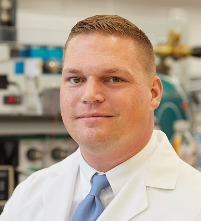
Timothy Collier, PhD |
||
| Dr. Timothy Collier is Scientific Director of Research & Development for the Quest Cardiometabolic Center of Excellence at Cleveland HeartLab, where his responsibilities include overseeing the identification and development of assays for cardiovascular biomarkers. He has been involved in the MSACL community for 10 years, serving as outgoing chair of the 2025 meeting in Montreal after chairing the 2024 meeting in Monterrey. He was the 2023 recipient of the Bereman Award for Innovative Clinical Proteomics, and enjoys mentoring new scientists involved in Clinical Mass Spectrometry. | |||
|
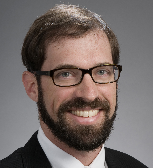
Andy Hoofnagle, MD, PhD |
||
| Dr. Hoofnagle's laboratory focuses on the precise quantification of recognized protein biomarkers in human plasma using LC-MRM/MS. In addition, they have worked to develop novel assays for the quantification of small molecules in clinical and research settings. His laboratory also studies the role that the systemic inflammation plays in the pathophysiology of obesity, diabetes, and cardiovascular disease. | |||
|
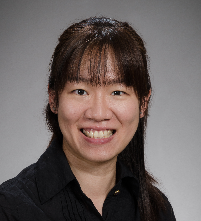
Hsuan-Chieh (Joyce) Liao, PhD, DABCC |
||
| Dr. Joyce Liao was a medical laboratory scientist in the newborn screening lab and obtained her Ph.D. degree in Clinical Medicine. She completed postdoctoral fellowship training in Clinical Chemistry at the University of Washington and Seattle Children’s Hospital. She is a board-certified Clinical Chemist and now serves as Chemistry Director at Harborview Medical Center. She continues to focus on the translation of the analytical power of mass spectrometry to real clinical applications. Her interests include toxicology, mass spectrometry, and laboratory utilization. | |||
|
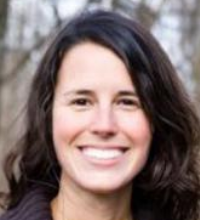
Kara Lynch, PhD, DABCC |
||
| Dr. Kara Lynch is a Professor of Laboratory Medicine at the University of California San Francisco, Co-Director of the Core Laboratory at San Francisco General Hospital and Chemistry Director at UCSF Children’s Hospital Oakland. She is the co-director of the COMACC-accredited Clinical Chemistry Fellowship Program at UCSF. Her laboratory conducts studies aimed at identifying and quantifying endogenous and exogenous small molecules in biological specimens using novel diagnostic technologies, such as high resolution mass spectrometry, ion mobility mass spectrometry, ambient ionization mass spectrometry and biolayer interferometry. Her lab is involved in translational research studies evaluating the clinical utility of novel biomarkers or biomarker panels to diagnosis, treat and monitor disease. The methods developed in her laboratory are used to investigate perturbations in metabolic pathways caused by disease and drug use and translate the results into information that can be used in clinical practice. | |||
|
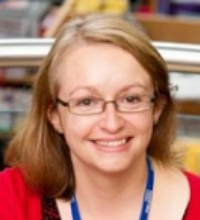
Elizabeth Want, PhD |
||
|
I am an Associate Professor (Reader) in Clinical Mass Spectrometry in the Department of Metabolism, Digestion and Reproduction. I joined Imperial College in 2006 after working as a postdoctoral researcher at the Scripps Research Institute in La Jolla, CA. At Imperial College, I was initially a postdoctoral researcher for the Consortium for Metabonomic Toxicology (COMET) group. My research focuses primarily on the development and application of novel mass spectrometry (MS) based techniques for metabolic phenotyping and on the fusion of mass spectrometric methods with chemometric analysis, which is currently a significant bottleneck in the analysis pipeline. Broadly, my research at Imperial College has involved the development, optimisation and application of UPLC-MS methodologies for the analysis of biological samples, largely in the context of metabolic phenotyping: serum, urine, tissue, amniotic fluid, and microdialysates. These developmental advances have resulted in shorter analysis times – and therefore higher sample throughput – key for large scale metabolic phenotyping studies. Peak detection and analytical reproducibility have been enhanced, improving metabolome coverage and the potential for biomarker identification and quantification. I am applying these methods to biomedical research areas including toxicology, burn injury, traumatic brain injury and neurological diseases. |
|||

|

|

|
Join the conversation